
Hitting the Right Notes
Lamont’s signature opera production showcases teamwork, skill, and the magic that happens when preparation meets performance.
By Anna Filippova
The props are in place. The costumes are glimmering. The instruments have been tuned. Months of planning and practice have culminated in opening night of the Lamont School of Music’s full-scale production of the Johann Strauss II operetta, “Die Fledermaus.”
The opera theatre program is the largest of Lamont’s many ensembles, bringing together the entire vocal program and orchestra every spring for its signature event. More than 100 undergraduate and graduate students, faculty, staff, and recent alumni are involved in each production.
“Putting on an opera is a monumental task. It’s not just a musical performance; it’s a theatrical performance, and it requires so many different people with varying skills to be involved,” says Sahar Nouri, music director of Lamont Opera Theatre.
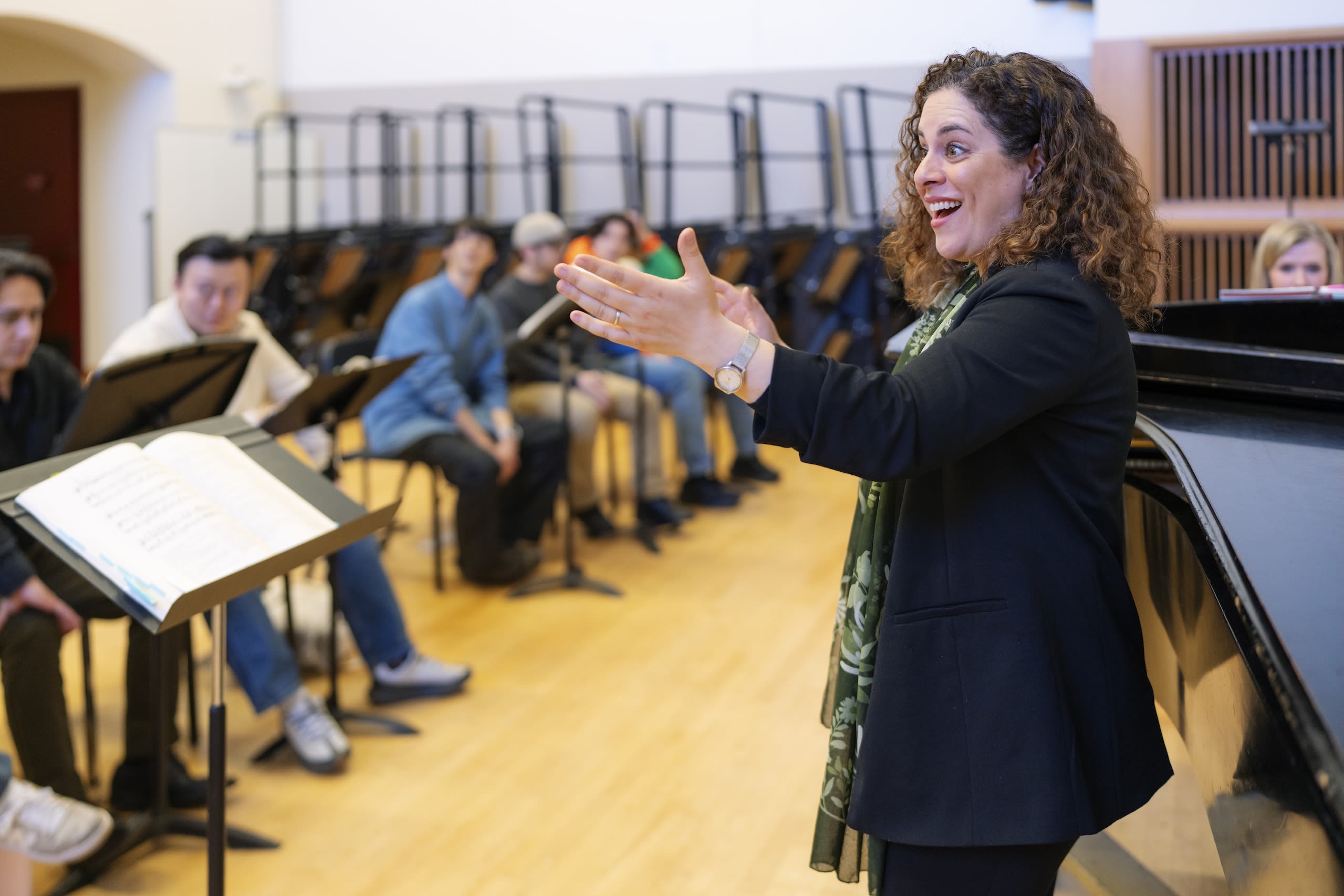
Nouri came to DU in 2019 and has led several productions, ranging from classic operas like “The Magic Flute,” written in 1791, to more modern ones like Rachel Portman’s “The Little Prince,” which was first performed in 2003.
Originally from Iran, she previously worked at opera houses across the U.S. from San Francisco to Boston. She eventually landed at Opera Colorado, where she continues to serve as chorus master, assistant conductor, and pianist coach in addition to her role at DU.
Nouri played violin and piano growing up and also loved poetry, which translated into a love for opera and, eventually, conducting. “It’s so inspiring to work with a huge group of artists and create a production that is exciting musically but also based on the wonder of poetry, language, and storytelling,” she says.
Setting the stage
Nouri and Artistic Director Matthew Plenk start the process of selecting an opera in June of the previous year, basing their decision partly on the strengths of their vocal students. “We choose pieces that fit both our returning and incoming students and their vocal ranges well but that will also challenge them,” Nouri says.
They decided on “Die Fledermaus,” a comic operetta, in honor of the composer’s 200th birthday. “It’s a crowd pleaser, with very tuneful melodies and, more importantly, it has many roles for our students to showcase their talents,” says Nouri.
Set in Vienna, the operetta centers on an elaborate revenge plot involving a masquerade ball, where a group of friends and servants use disguises and champagne to humiliate a philandering aristocrat—while satirizing the social pretensions of the elite.
Once the opera was selected, Nouri and Plenk spent the summer on logistics: choosing the sets; lining up supporting staff like choreographers, set designers, and coaches; creating budgets and schedules; and deciding what direction the opera will take—does it need to be modified? How many rehearsals are needed? What language materials do the students need? When the students arrived in the fall, auditions took place and rehearsals began.

Sahar Nouri has been music director of Lamont Opera Theater since 2019.
Sahar Nouri has been music director of Lamont Opera Theater since 2019.


Finding their voices
For students, being part of “Die Fledermaus” was an intense but rewarding experience, with at least nine hours of rehearsals a week as well as individualized coaching in voice and acting. The production featured 10 lead singing roles and more than 20 students in the chorus, with songs performed entirely in German—making learning the language an essential first step.
As Mackenzie Laun, a second-year master’s student studying vocal performance who played Adele, says, “We did dialogue in English and then sang in German, which can get wordy, but preparation helps.” Students got diction and pronunciation help from Heidi Melton, assistant professor of voice, who studied in Germany. Often, Lamont brings in coaches who are native speakers of the language of the opera being performed.
Students must also adapt their mannerisms to match their roles. First-year master’s student Alma Sejmenović, a vocal performance major, was cast as Orlofsky, a traditional “pants role”—a young male character typically sung by a mezzo-soprano. “I needed to think more about posture, walking, carrying myself, and even learning how to perform in dress shoes instead of character shoes or heels,” she says.
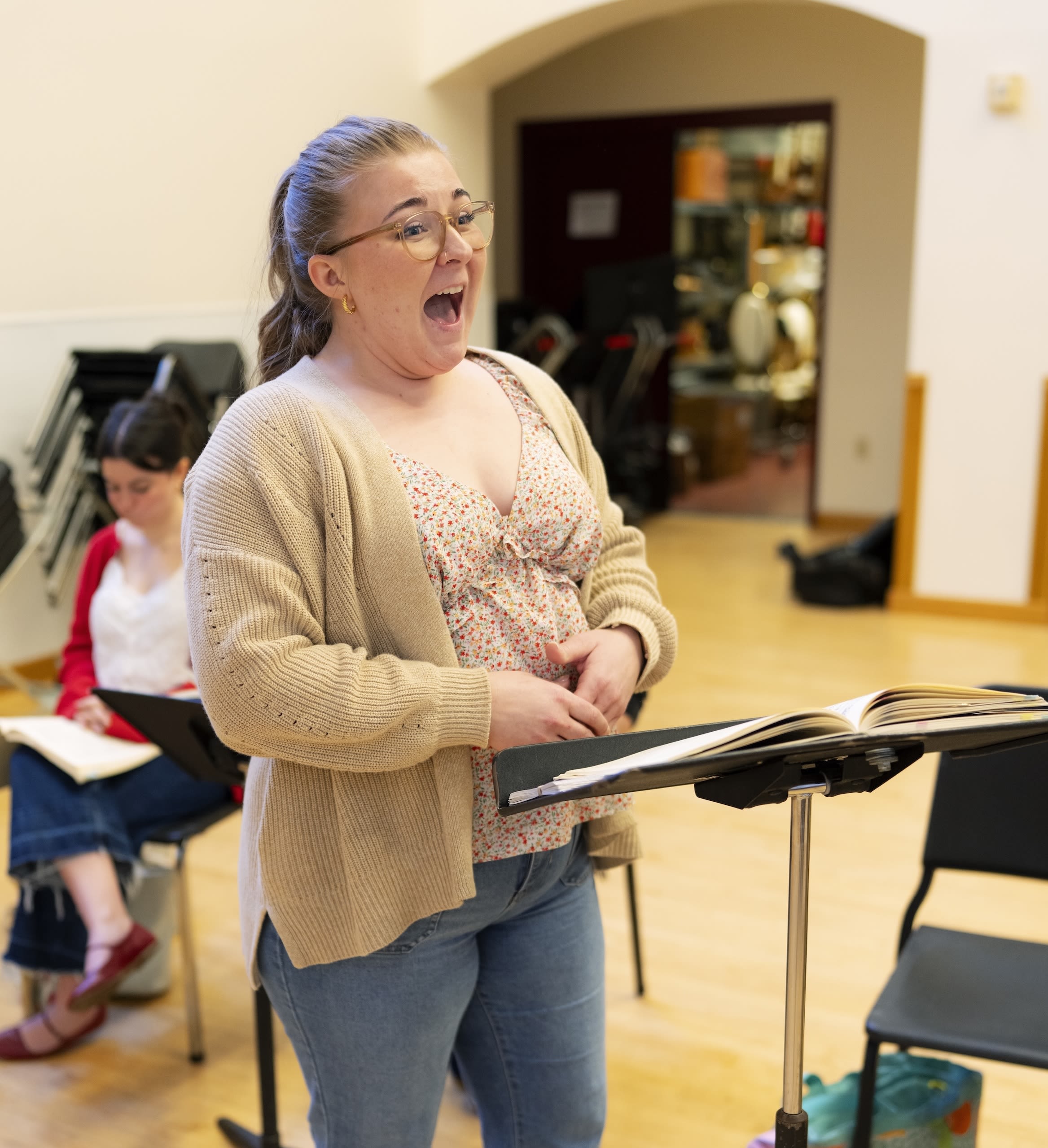
Students say all the hard work pays off when the production finally comes together. Regan Lewis, a recent alumna earning a performance certificate and playing the role of Rosalinde, says one of the most rewarding moments is seeing every element—sets, costumes, and props—come to life.
“This is definitely one of the biggest roles I’ve ever had in my life,” Lewis says. “Having the chance to learn it and do it justice has been such a blessing and so much fun.”
The final note
Delighted audiences filled the seats in Gates Concert Hall at the end of April for this year’s reimagining of “Die Fledermaus”—showing once again the joy that opera brings and the importance of the art form.
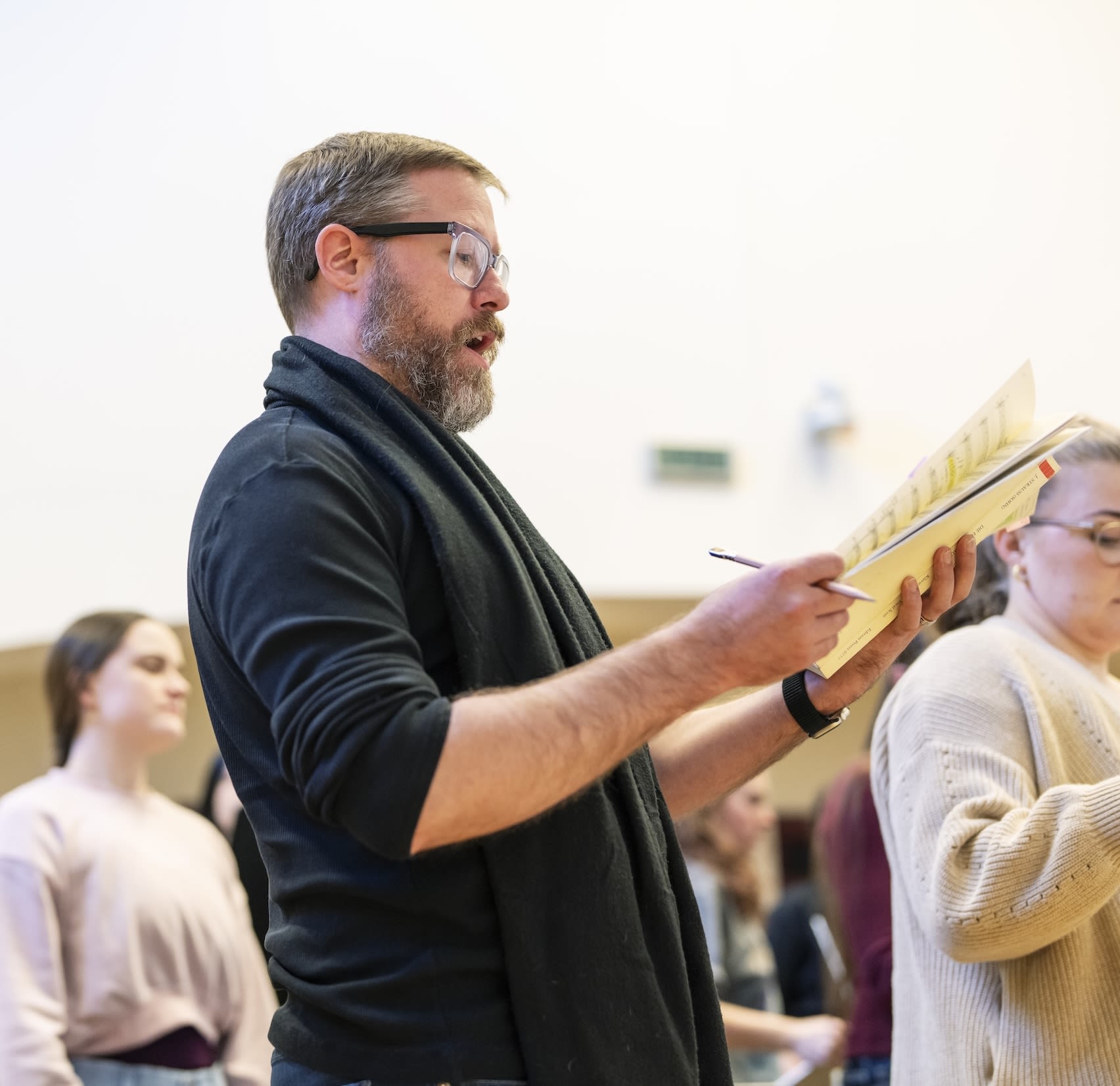
Anthony Wirtz, a second-year dual master’s student in vocal performance and choral conducting who played the role of Eisenstein, says the opportunity to share opera with Lamont audiences is especially meaningful. “Presenting something that maybe some people have never seen before—whether they are opera fans or have never seen a production—and inspiring them is very fulfilling.”
As the final curtain fell on another successful production, Lamont’s opera program once again proved it strength. “The level of students’ success has been consistently improving,” Nouri says. “We’ve had students get into impressive professional programs right after graduation, and our enrollment is growing. I’m just very proud.”
 Built with Shorthand