
Leaps and Bounds
DU Researchers Seek Solutions to Prevent Achilles Tendon Injuries Among Collegiate Women Gymnasts


“Our goal is that no athlete is taken out of their career because of injury. That they’re able to continue competing, and competing safely. And that coaches and athletic training staff are educated on how to keep athletes safe in every single aspect of the sport.”
Within DU’s Department of Mechanical Engineering, a specialized research group is tackling a complex project in the field of sports biomechanics. Led by Michelle Sabick, PhD, dean of the Daniel Felix Ritchie School of Engineering and Computer Science, the team is working to predict, mitigate, and ultimately, prevent Achilles tendon injuries. Their work has the potential to shape the lives of athletes everywhere.
The High Stakes of an Achilles Injury
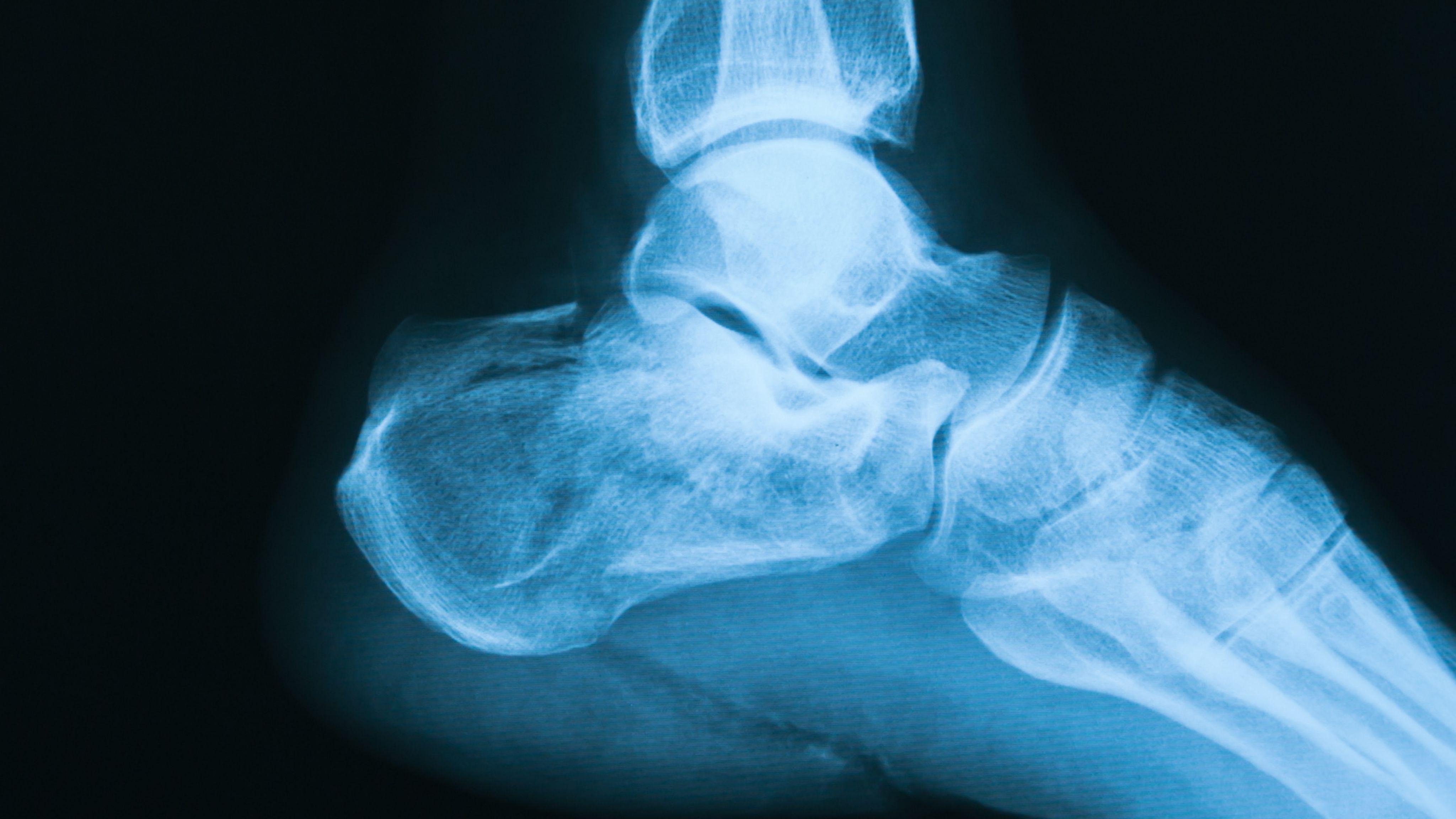
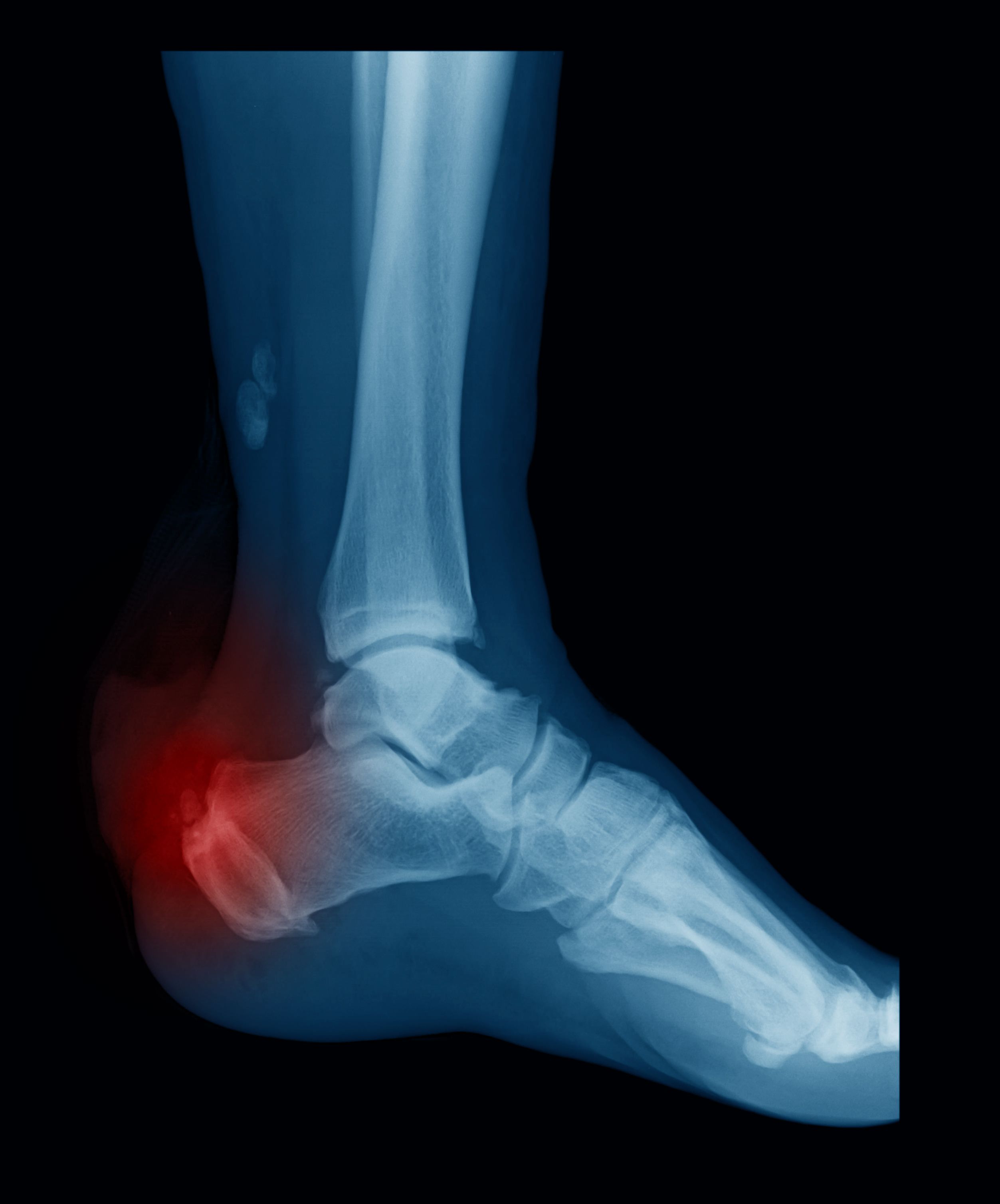
Achilles tendon injuries can have serious, sometimes catastrophic, impacts on an athlete’s career, as well as their long-term physical and mental health. “The impact of an Achilles rupture is significant,” explains Julie Campbell, DU associate vice chancellor and deputy athletic director for Pioneer Health and Performance. “In some cases, it can be 9 to 12 months before they can return to competitive-level sport, if ever.”
Campbell, a designated DU athletics health care administrator with primary day-to-day medical care oversight for the women’s gymnastics team, notes that even less-severe Achilles injuries can cause serious health and performance ramifications, taking an athlete out of their sport for weeks or months.
Although this research is immediately relevant to athletes, its potential extends across the medical field. “The Achilles tendon is absolutely paramount for gait, jumping, landing, walking — a lot of activities of regular human movement,” explains Sabick. A recent scientific study from the University of Ottawa demonstrates that in the last decade, incidents of Achilles tendon injuries among US Adults have increased significantly, particularly affecting adults over 30. Both in and out of professional sports contexts, it is vital to understand how this essential and vulnerable tendon functions so that more people can mitigate and eliminate injuries.

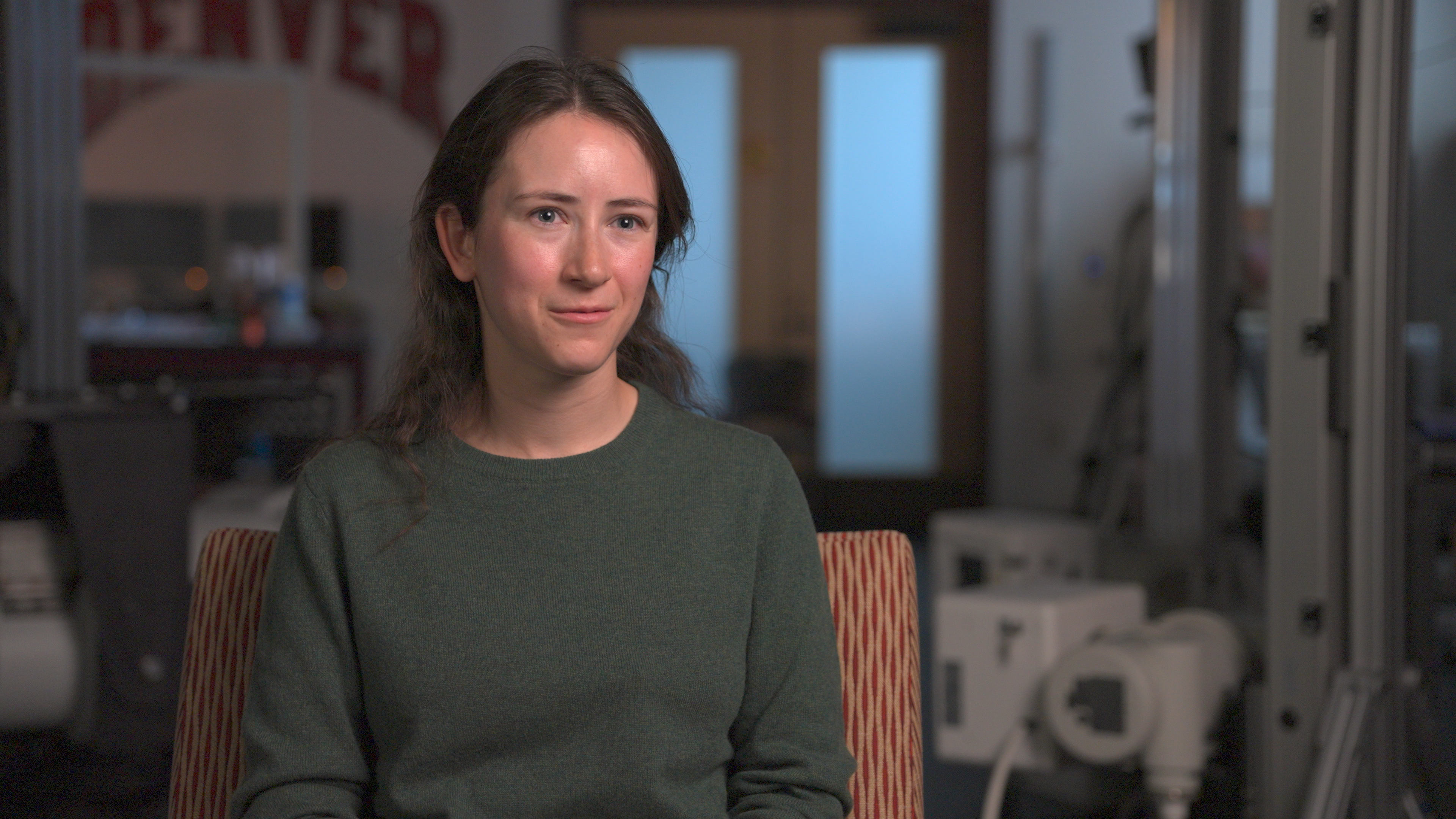
“We’re trying to find corollary measurements to Achilles tendon injury risk so that we can better equip athletes, coaches, and athletic trainers to mitigate that risk and potentially prolong athletes’ health and careers.”
Problem Solving for the Public Good
Sabick’s team is primarily focused on women’s gymnastics, a sport where Achilles tendon injuries are all too prevalent. A few years ago, two women’s gymnastics teams had a string of career-ending Achilles tendon ruptures,” says Julia Dunn, PhD, postdoctoral research fellow on Sabick’s team. “One of the athletes who was affected by that came to Dr. Sabick and essentially asked, What's going on? Why is this happening? And a good researcher really can’t let that slide.”
One unique part of the project is that the researchers are working with mostly female athletes, a population that is frequently underserved in the field. “We know that a female gymnast in the college ranks is ten times more likely to rupture their Achilles than in any other sport, and we’re seeing that across the board,” says Campbell. “Finding a way to decrease the risk of this injury and elevate their college experience is what we’re aiming for in this.”




“This is the first study that we know of that’s looking at Achilles tendon injuries in female gymnasts at the collegiate level. Most previous research has been done in retrospect. Instead, we are trying to look at what’s going on with the athlete right now. That can predict, and therefore prevent, future injury.”
4D in Practice: Enriching Student Wellbeing
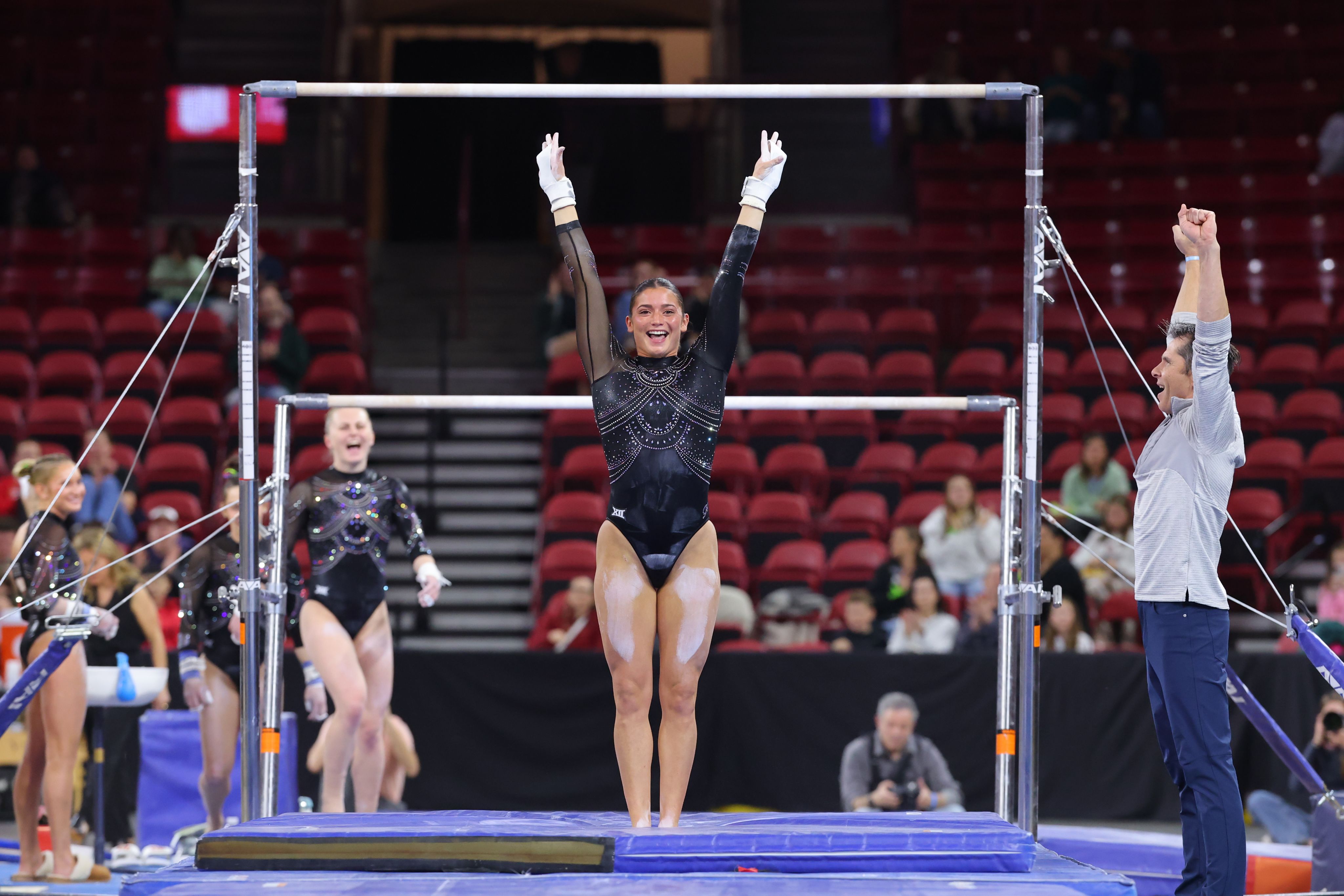
Another unique component of this study is its real-time collaboration with college athletes across multiple seasons, developing and implementing translatable, practical solutions that consider input from the athlete themselves. Campbell says that participating in the study benefits students not just in health and wellness but also in their sense of discovery and experiential learning, which are critical to the 4D experience. “It’s a win for them academically,” she says.
Amanda Hargraves, a DU student gymnast and research assistant on Sabick’s team, was drawn to the project’s potential significant impact on both athletes and medical researchers. “It really hit home because two of my gymnastics teammates during my senior year of high school tore their ‘heelys,’” she says. “I’m a STEM major, looking to go into medicine — I want to be a sports orthopedic surgeon — and so, to help solve this problem is an amazing opportunity.”
Likewise, student gymnast Ashley Gallen, who is participating as a research subject in the study, echoes this. “As a gymnast, injury is always on my mind,” she reflects. “I have had injuries in the past, and they’re pretty devastating. I am really happy that this research is being done at DU; it is super important to all of us gymnasts and meaningful work to be a part of.”
“This is an amazing opportunity for us to collect relevant data on athletes while they’re actually in their practices. That can, in the long term, contribute not only to preventing injuries among our gymnasts but also to the national discussion on how to prevent these injuries for all athletes.”

Shared Success Through Mentorship
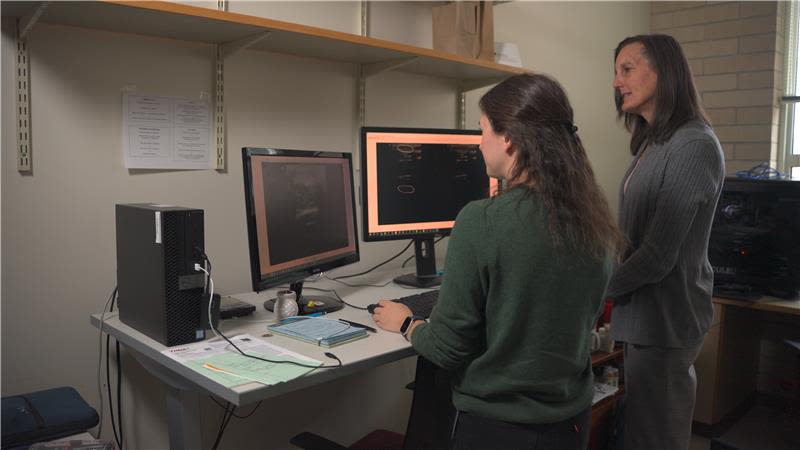
“I'm lucky to have Michelle Sabick as a research mentor. It’s important to me, in engineering, to have a female role model and a female advisor, both from a research standpoint and a career standpoint. We are equally excited that our current master's student and research assistant are women, too.”

Tracking Movements to Protect Tendon Health
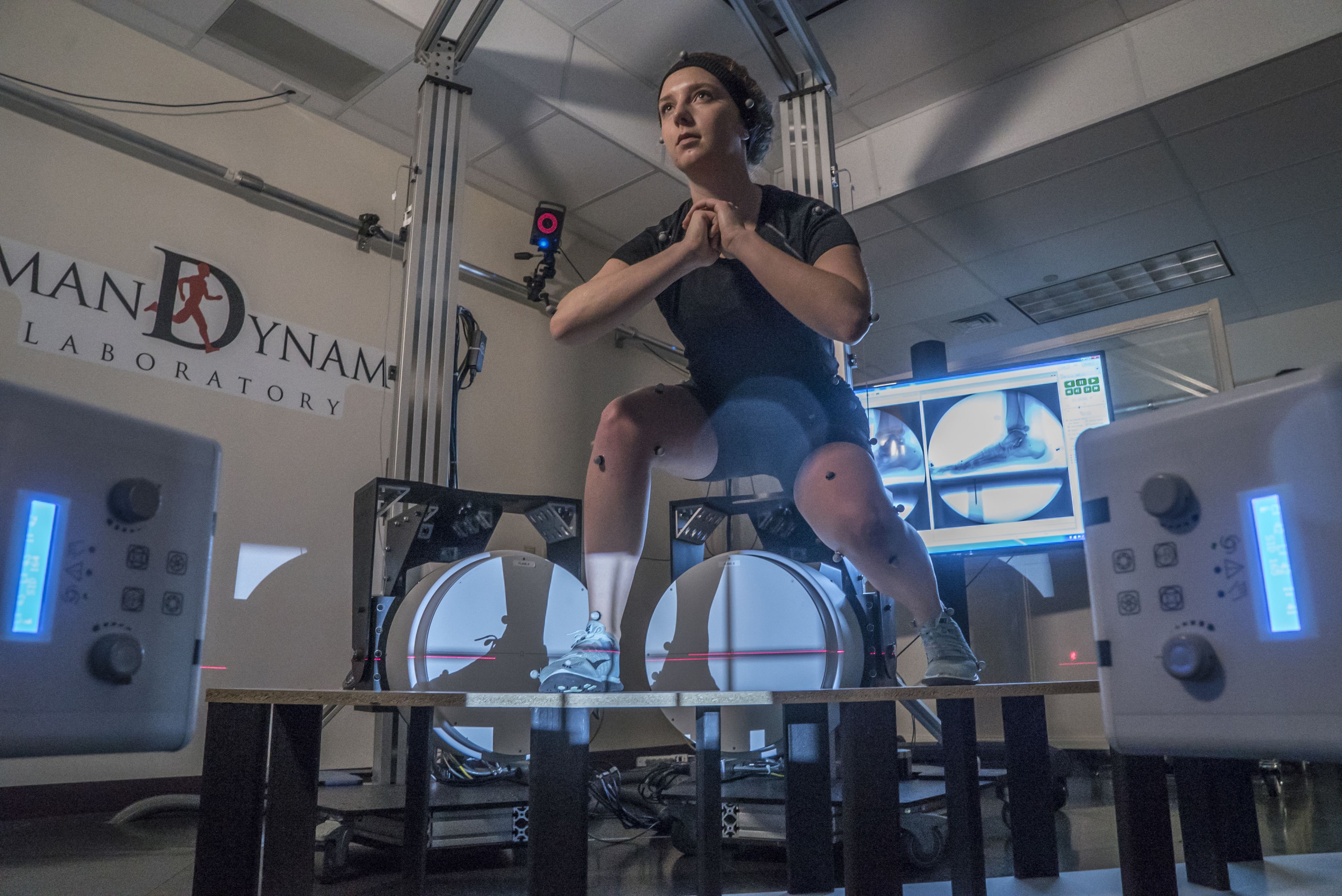
This research focuses in part on how athletes perform a “drop jump,” a regular training metric known to correlate to tendon health. “The athlete starts on a wooden box about 30cm high,” explains Dunn. “They drop down from the box onto force plates and land in a squat; then, they jump up again, as high as they can, as fast as they can.” By collecting data on these movements, researchers can decipher if, and how, the body is responding to exercise.
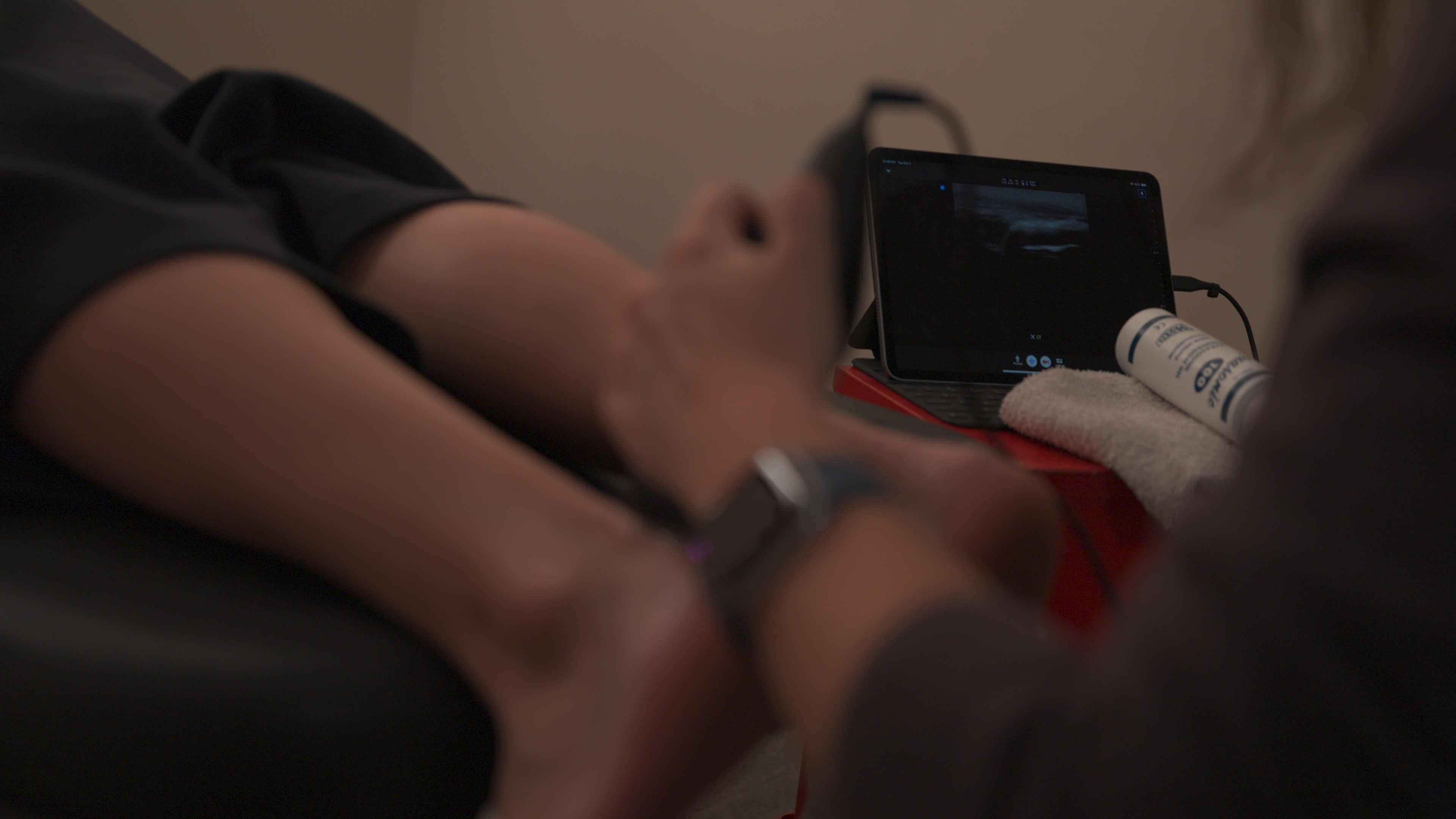
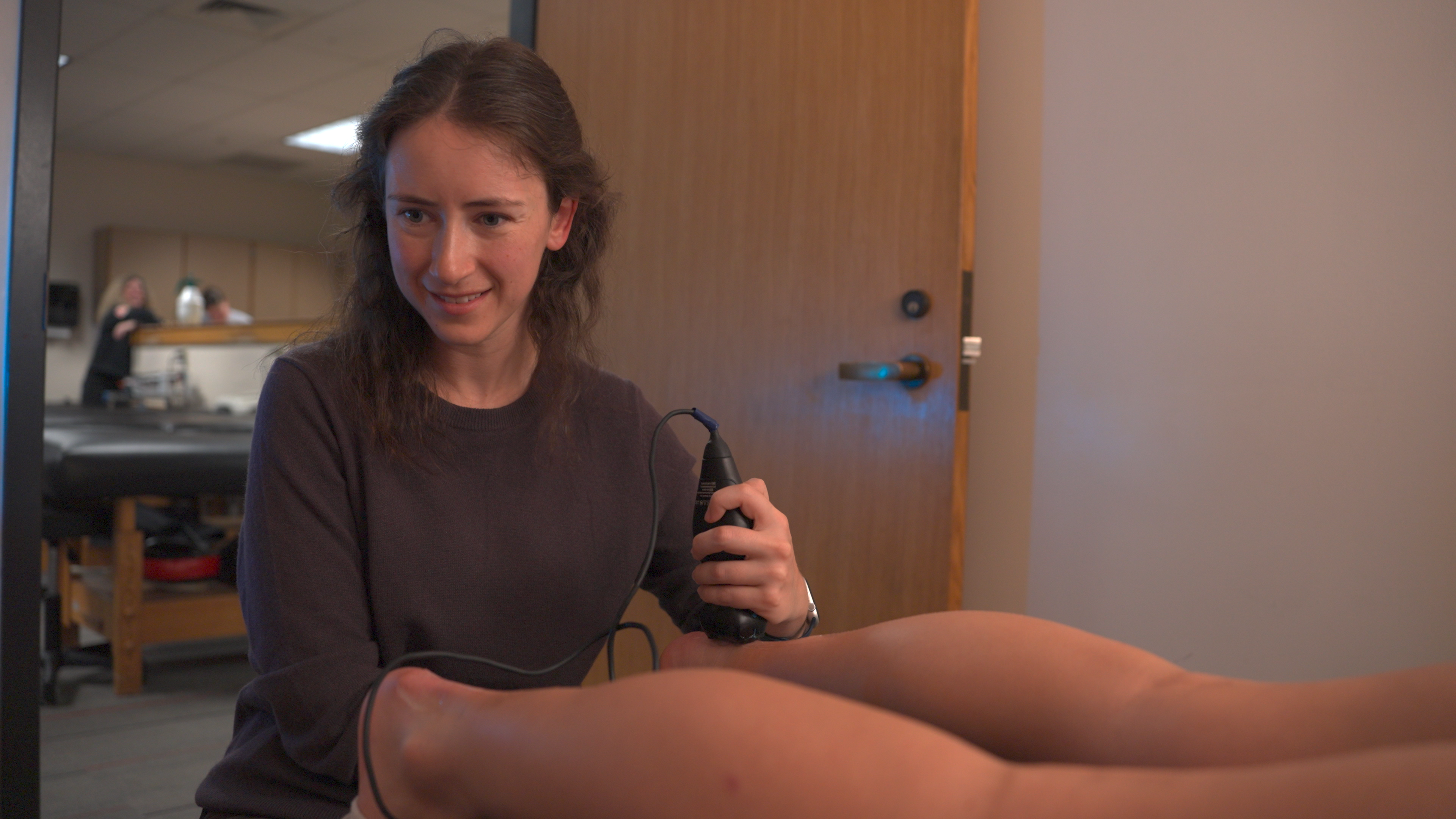
They also measure athletes’ “training load” — how hard and how often they land — to gauge the impact on their bodies. To ensure consistent, ongoing datasets that represent the many different movements gymnasts perform when they train and practice, researchers equip the athletes with wrist and ankle devices that collect data as well as perform weekly bilateral ultrasounds.
Sabick adds, “Once a week, we take measurements of the size and shape of the Achilles tendon to get a feel for whether changes are occurring.” Having enthusiastically agreed to participate in the study, the student-athletes also frequently submit surveys that report pain in their tendons and elsewhere in their bodies, as well as provide menstrual cycle tracking data — medically essential but often overlooked information that can have a bearing on women athletes’ injury risk.

Mission-driven R1 Research at DU
This project supports DU’s prestigious Carnegie R1 designation — a status awarded to universities with the highest levels of research activity. This elite classification places DU among the top research institutions in the nation and underscores our commitment to advancing knowledge, innovation, and real-word impact. The R1 distinction highlights the depth and breadth of DU’s research initiatives, faculty expertise, and dedication to generating solutions for global challenges.





Power in Collaboration
Both Dunn and Sabick credit a large part of the study’s success to the willingness of DU’s coaches, trainers, and student athletes to actively participate in the work. “This is research that really is only being done at DU,” says Dunn, “and it's because of the incredible partnership that the athletic training staff and the coaches have made with our research team.”
Sabick says that she has been impressed by the care and responsibility that the leadership team shows for their athletes, and that this is reflected in their enthusiasm for the project. “The students and staff have really embraced us,” she shares.
Together, the research team, athletes, and a constellation of coaches, trainers, and supporters are working toward solutions in sports biomechanics that have the power to change lives. “It is hard to quantify how many injuries we prevent, because you can’t count injuries that don’t occur,” says Dunn, “but that’s ultimately the whole point.”
Athletics at DU
University of Denver Athletics epitomizes a comprehensive NCAA Division I program committed to broad-based excellence in competition, academics, and social engagement. We transform student-athletes into leaders, champions, and agents of positive change who serve the public good while excelling in their sports and studies.






Let’s show the world what DU can do.
Your scholarship support fuels the next generation of entrepreneurs and community leaders.




The Denver Difference campaign is empowering DU to lead with a bold, innovative approach and redefine higher education—driving a lasting impact on the public good through its visionary people, programs, and places.
University of Denver | Advancement | 2199 S. University Blvd | Denver, CO 80208 | advancement@du.edu
 Built with Shorthand